
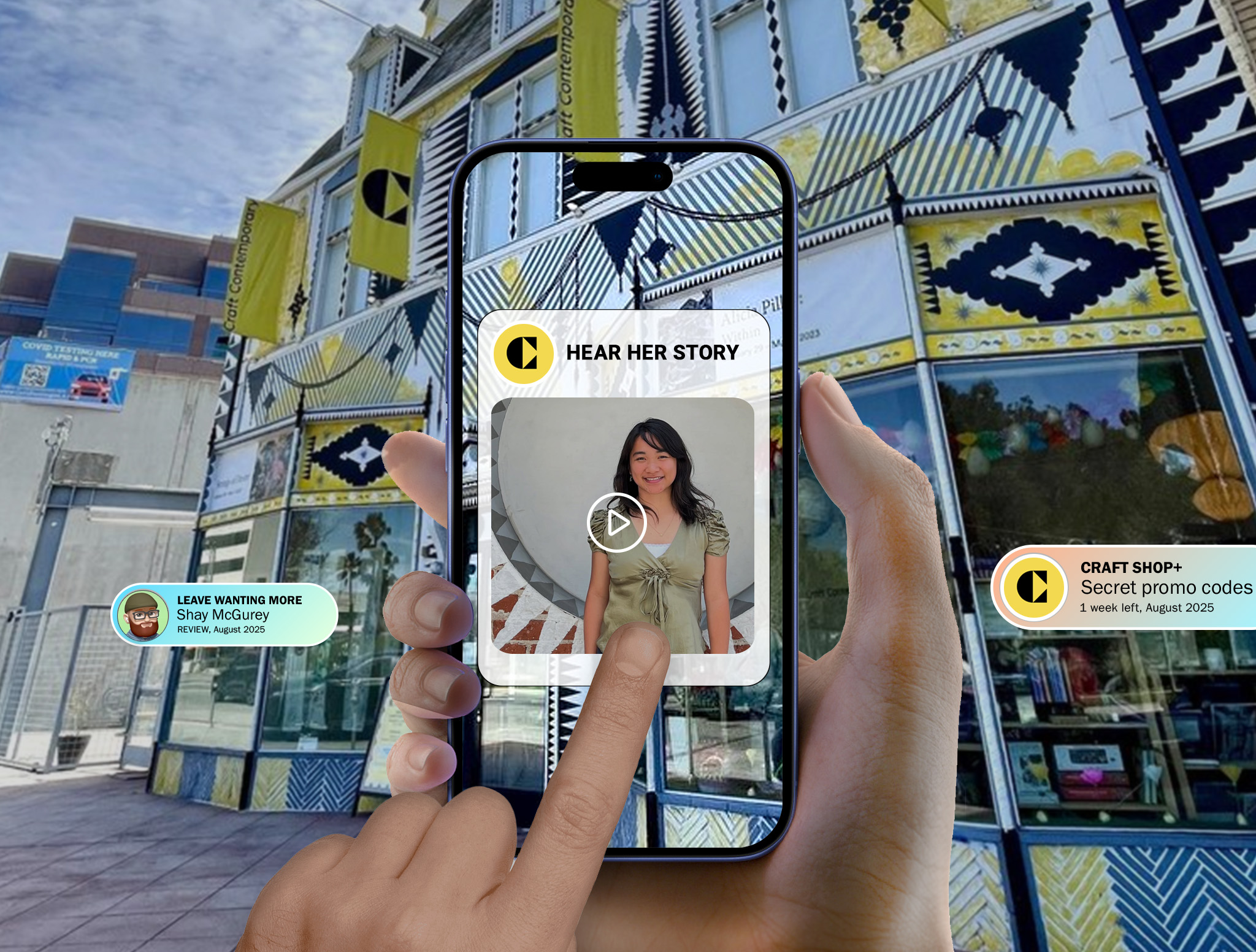
Executive Summary: Project SondAR (*working title) is a mobile AR application that enables users to create and share digital content anchored to physical locations, supporting use cases from informal business training to museum engagement and social discovery. This case study explores the platform’s design, core mechanics, and real-world applications. [Reading time: 4 minutes]
Introduction
Project SondAR is a mobile augmented reality application that enables users to create and share digital content anchored to physical locations. Unlike traditional social media platforms that prioritize algorithmic feeds and passive consumption, SondAR focuses on active creation and hyperlocal discovery—encouraging users to explore their physical environment while connecting with friends through spatially-anchored AR experiences.
The Core Experience
At the heart of SondAR is the “pin”—a piece of AR content (video, photo, audio, or text) placed at a specific geographic location. The creation process is straightforward: users capture or select content and drop it at their current location or anywhere on a map. These pins exist in the physical world, viewable only when other users are near that spot.
Beyond individual pins, “pin sequences” enable storytelling across multiple locations. A user might create a sequence documenting a neighborhood walking tour, a scavenger hunt, or a series of training checkpoints for employees learning a new facility. This transforms passive waypoint navigation into narrative experiences.
SondAR employs an invite-only network structure where users connect with friends and their friends—not strangers. Free-tier pins last 24 hours before disappearing, encouraging spontaneous sharing. Paid subscribers can place permanent pins, creating lasting landmarks within their social network.
Use Cases in Practice
Museum and Cultural Engagement
The Craft Contemporary Museum in Los Angeles serves as a pilot partner, exploring how location-based AR enhances visitor experiences. Museum educators place pins at specific artworks providing additional context, artist interviews, or behind-the-scenes content. Visitors drop their own pins sharing reactions and interpretations, creating a living conversation around the collection.
A teacher bringing a class can create a pin sequence guiding students through exhibits in a specific order, with each pin posing questions or highlighting connections between works. Unlike traditional audio guides, this approach is updateable in real-time, social and collaborative rather than one-directional, and enables visitors to contribute to collective knowledge.
Small and Mid-Sized Business Training
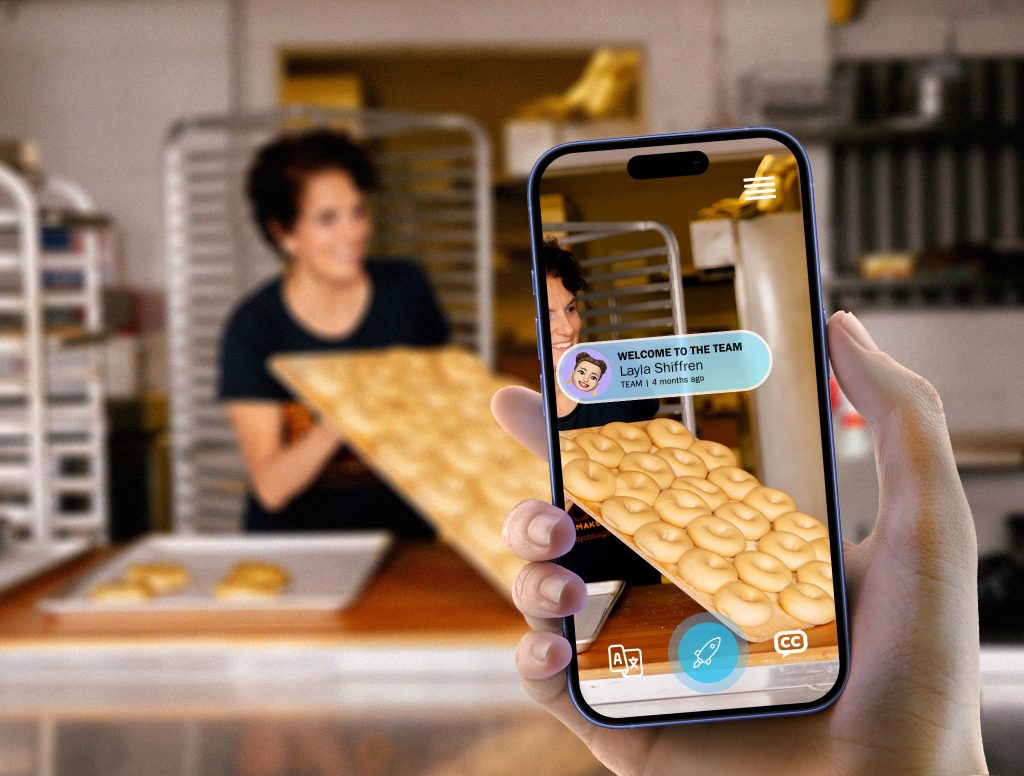
For businesses with physical locations—retail stores, restaurants, warehouses—SondAR offers practical spatial training solutions. A retail manager can create a pin sequence throughout the store: a welcome video at the entrance, POS tutorial at the register, inventory procedures at the stockroom, merchandising standards at the display window, and quiz questions back at the entrance.
New employees walk through the physical space discovering each pin in sequence. Training becomes contextualized (learning happens where tasks are performed), self-paced, easy to update, and interactive. A restaurant could place permanent pins at each service station explaining protocols specific to that area, with seasonal menu changes updated in the relevant pins rather than requiring new training sessions.
Event Activations and Local Exploration
Large-scale events like music festivals or conferences enable unique applications. Event organizers pre-populate venues with “easter eggs”—hidden AR content that rewards exploration. Artists place pins at stage locations with exclusive content, sponsors create AR brand experiences, and attendees share pins documenting favorite moments, creating a collective memory map.
For tourism, users see pins left by friends who’ve visited before—personal recommendations rather than impersonal reviews. A traveler in Los Angeles might discover a friend’s pin at a taco truck with a video review, another friend’s street art walking tour sequence, hiking trail conditions, or bookstore recommendations. These trusted sources create more intimate discovery experiences than traditional travel apps.
Technical Design Choices
The decision to make free-tier pins disappear after 24 hours reflects a deliberate stance against permanent record anxiety. Users share spontaneous moments without those moments living forever in a searchable archive. For use cases requiring permanence—business training, museum content, commemorative markers—paid tiers unlock this capability.
SondAR incorporates an “Audio Operating System,” acknowledging that AR experiences need not be purely visual. Users can place music, voice messages, or ambient sound at locations. A pin at a concert venue might include the song playing at that moment; a pin on a hiking trail could capture waterfall sounds.
By limiting content visibility to friend networks rather than making everything public, SondAR addresses privacy concerns inherent in location-based social apps. Users control who sees their pins by controlling their connections. Professional tiers introduce public posting as an opt-in feature rather than the default mode.
The platform includes a marketplace where creators design and sell profile packages, stickers, avatars, and animations. This creates a potential creator ecosystem—digital artists can build businesses creating SondAR-specific content, while companies can commission custom branded elements for training pins.
Conclusion
Project SondAR represents an approach to social sharing that prioritizes place, privacy, and active creation. By anchoring digital content to physical locations, it creates opportunities for enhanced experiences across contexts—from casual friend interactions to professional training to cultural education. The application’s most compelling use cases emerge where physical space and digital information need to intersect: teaching employees procedures at work locations, enriching museum visits with layered context, and creating narrative experiences across real-world geography. Whether SondAR succeeds depends on building communities of creators needed to make explored locations feel meaningfully richer than the world we already inhabit.