
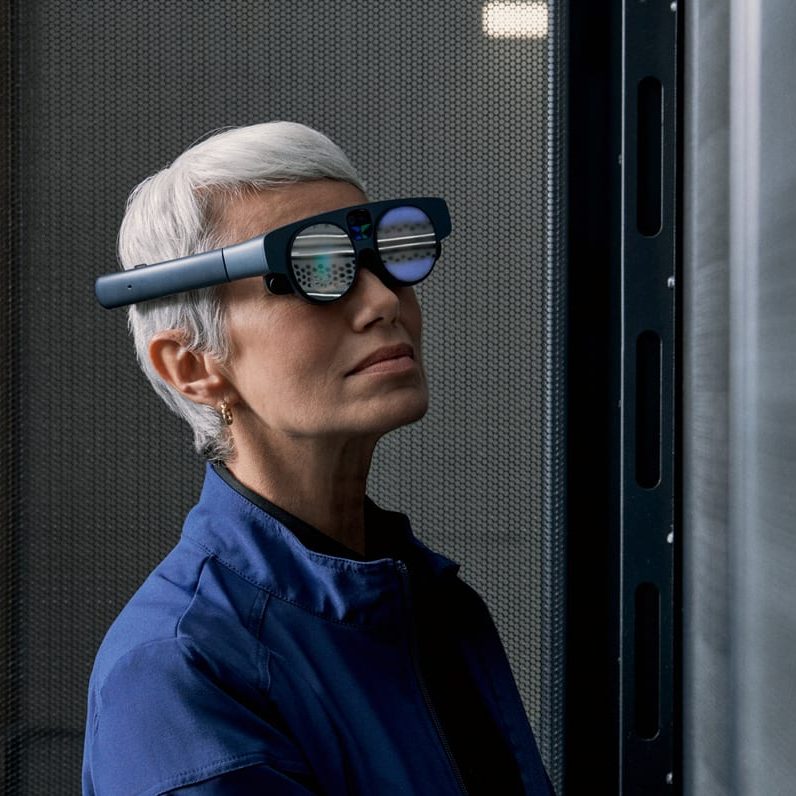
Magic Leap engaged a development partner to rapidly prototype a spatial training prototype as part of its push into enterprise use cases. I was brought in through that team to translate early storyboards into a working product experience aligned with their platform and interface standards.
The concept was straightforward: enable trainers to record guided sessions within a physical environment, then allow trainees to access those sessions, hit play, and move through them in context. Rather than watching a training video or reading documentation, users would follow a lesson spatially—guided by voice, media, and location-based cues tied directly to their surroundings.
I led the UX/UI definition, shaping how these interactions would function on-device. Trainers could record sessions, place spatial anchors, and attach media at specific points in an environment. Trainees could then load a session and walk through it step by step, guided by voice narration, visual markers, and directional cues that ensured continuity through the experience.

The system also included a lightweight content layer.
Lessons could be created and modified on-device, with a basic CMS supporting assignment, updates, and archiving across users within an organization. This allowed training content to be reused and distributed without rebuilding each time.
The work was completed over a four-month sprint and delivered as a functioning prototype running on first-generation hardware. It performed with low latency and was used internally, as well as shared with external partners as part of Magic Leap’s enterprise positioning.

One of the primary challenges was designing for hardware that was still evolving.
We were working within the constraints of an early device while anticipating where the platform was heading. That required balancing what was technically feasible in the moment with interaction models that would remain relevant as the hardware matured.
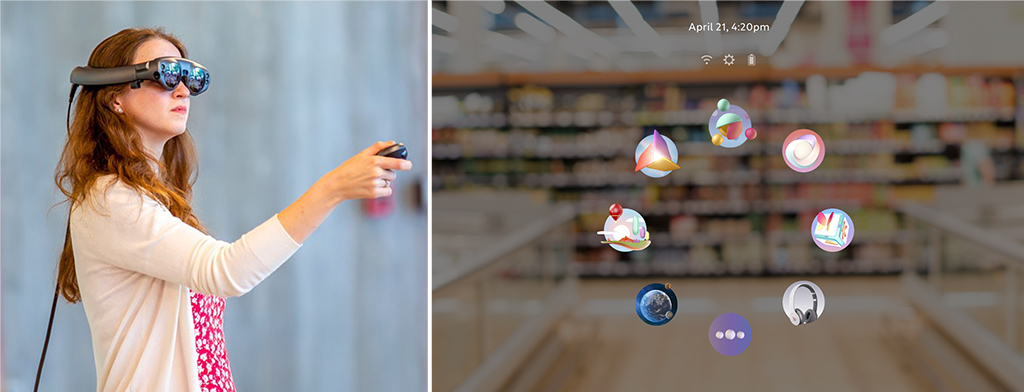
The result was a working system that demonstrated how spatial computing could be applied to real-world training and operations. While exploratory in nature, the approach aligned closely with Magic Leap’s subsequent direction around enterprise learning and on-device training applications.