
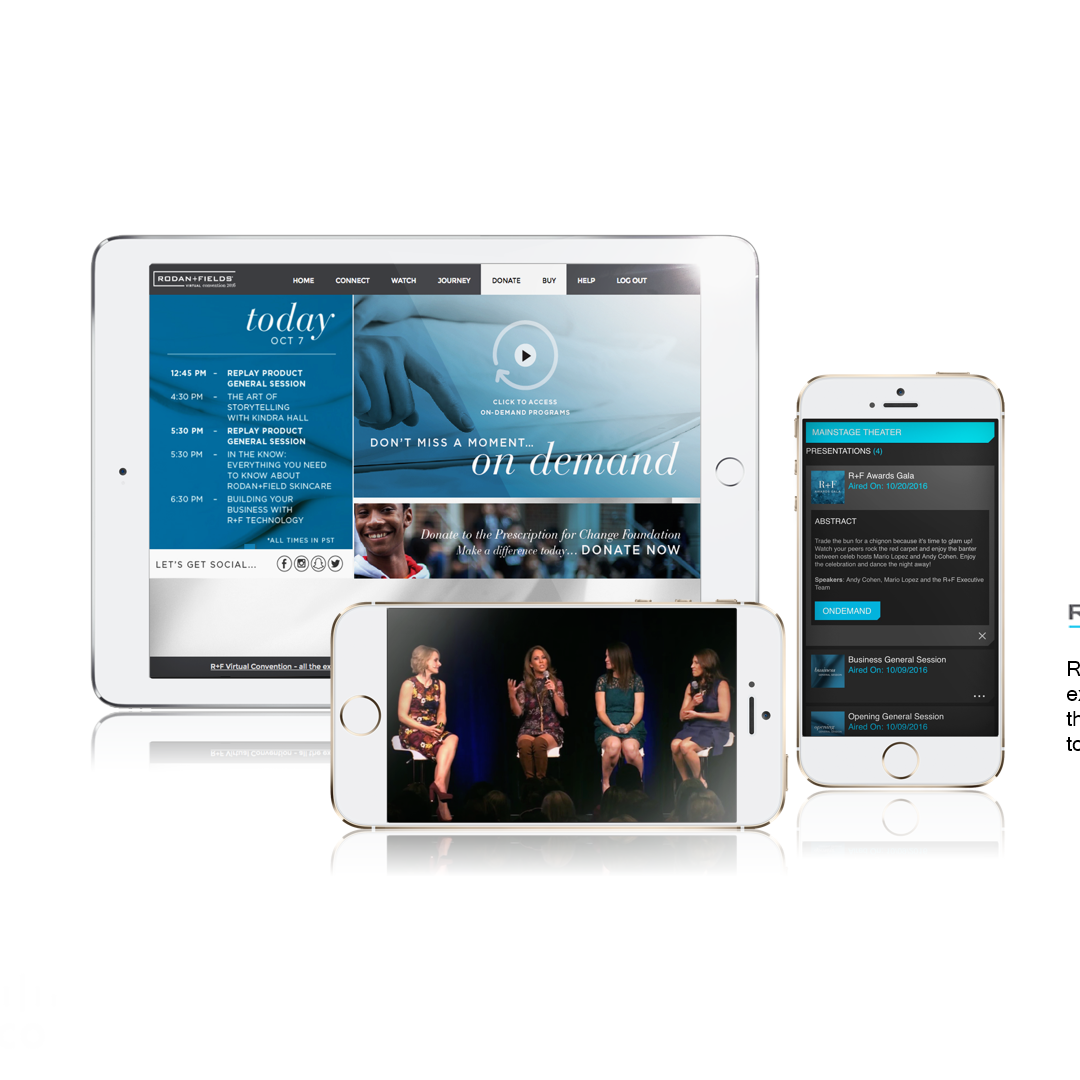
Rodan + Fields had built a powerful business on top of a distributed consultant network, but their core growth engine was still anchored in physical events. Those events worked—but they didn’t scale. Attendance capped out around 14–15K, and every launch, training, or major announcement depended on bringing people into the same place at the same time.
The opportunity wasn’t just to “take the event digital.” It was to rethink the entire model.
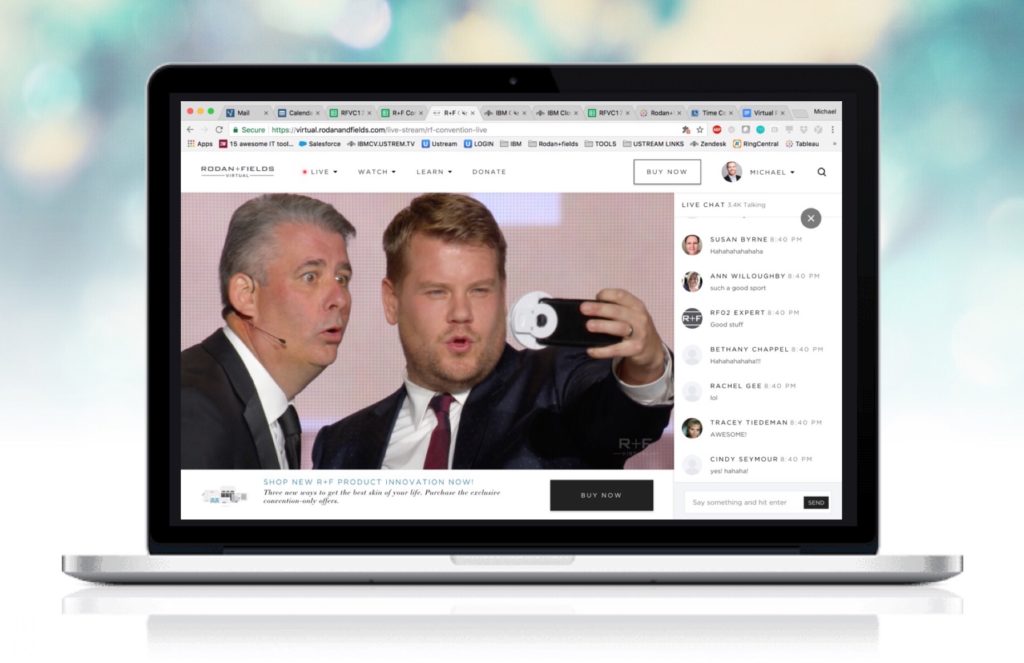
What we built was a paid, always-on virtual event platform that allowed consultants to engage with the brand, learn the product, and activate their own sales efforts without needing to be in the room. Instead of a one-time event, it became a persistent layer the business could operate on.
I was brought in to help define how this would actually work as a product—not just the experience, but the system behind it. That meant shaping the go-to-market approach, designing the user experience, and working with the client to define what the platform needed to do both at launch and over time.
The structure was simple, but deliberate. Consultants paid an annual subscription—$59.99—to access the virtual event platform. That immediately changed the dynamic. This wasn’t passive attendance; it was buy-in. Once inside, they had access to live programming, product deep dives, and direct interaction with leadership and high-profile guests. More importantly, the platform wasn’t just informational—it was actionable. We embedded purchase pathways directly into the experience, so moments of engagement could convert into real sales activity.
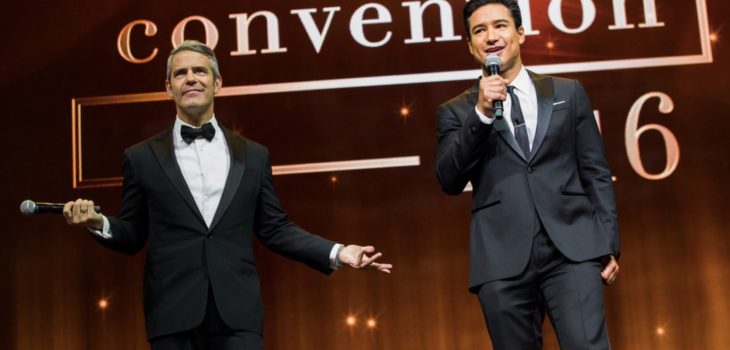
The first launch was designed for around 30,000 users.
Demand exceeded expectations quickly, and we ended up extending the platform well beyond that initial audience across subsequent rollouts. In total, reach more than doubled what their physical events had been able to support.
What mattered more than scale, though, was behavior. Engagement increased significantly—people weren’t just showing up, they were staying, interacting, and sharing. Social amplification alone effectively doubled reach again. And because access was paid, the platform generated over $1.5M in subscription revenue on its own, independent of the downstream product sales it enabled.
It wasn’t without friction.
The first version of the platform hit technical limits under real load, and we had to go back in and rework parts of the system to handle the level of concurrency we were seeing. But that was also proof that we had crossed the threshold from “event” to “product.” People were using it like infrastructure, not a one-off experience.
Looking back, what’s most relevant now is how early this was in terms of product thinking. Today, I would push it much further—introducing adaptive flows based on user behavior, using AI to personalize content and product exposure, and turning the platform into a continuously learning system rather than a programmed one.
But the core idea holds: instead of relying on periodic, high-effort events, we built a system that allowed the business to operate continuously—educating, engaging, and activating its network at scale.