
When COVID disrupted in-person events, enterprise organizations needed more than temporary substitutes. Their events weren’t just moments—they were critical systems for educating customers, launching products, and driving business forward.
The opportunity was to build something more durable: a B2B platform that could support these functions in a structured, repeatable way across different organizations and use cases.
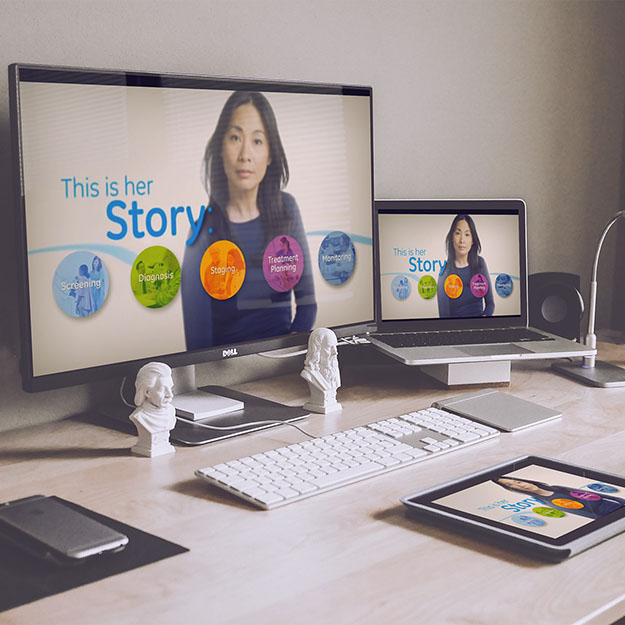
I led the effort as a product, not a one-off engagement. From the outset, the focus was on accessibility and flexibility. The platform was designed to be mobile-first and built on a standard web stack—no plugins, no downloads, and minimal friction to access. It needed to support both live interaction and self-directed exploration, recognizing that users engage differently depending on context and intent.
The system combined a live layer for real-time moments with an on-demand environment where users could move at their own pace—exploring content, engaging with product information, and joining key moments when relevant.
What made the platform effective was its underlying structure. It was built to be modular, allowing organizations to deploy different configurations depending on their needs. Some required highly customized environments, while others needed fast, repeatable deployments that could be branded and launched with minimal overhead. This flexibility made it possible to reuse the system across multiple initiatives without rebuilding each time.
Organizations applied the platform in different ways—partner engagement, product launches, internal programs—but the core value remained consistent: a reliable system for delivering content, facilitating interaction, and maintaining visibility into user engagement at scale and in a consistent, branded, and repeatable manner.
The platform supported multi-room environments, flexible navigation, product demonstrations, and live interaction. Just as important, it provided reporting that allowed teams to understand how users engaged—what they viewed, where they spent time, and how they moved through the experience. That visibility extended the value beyond the event itself, informing future decisions and programming.
As conditions changed and in-person events returned, usage didn’t decline. Instead, organizations continued to use the platform to extend their reach—filling gaps between major events with more targeted, lower-cost engagement. In many cases, it expanded their ability to connect with audiences beyond what had previously been possible.
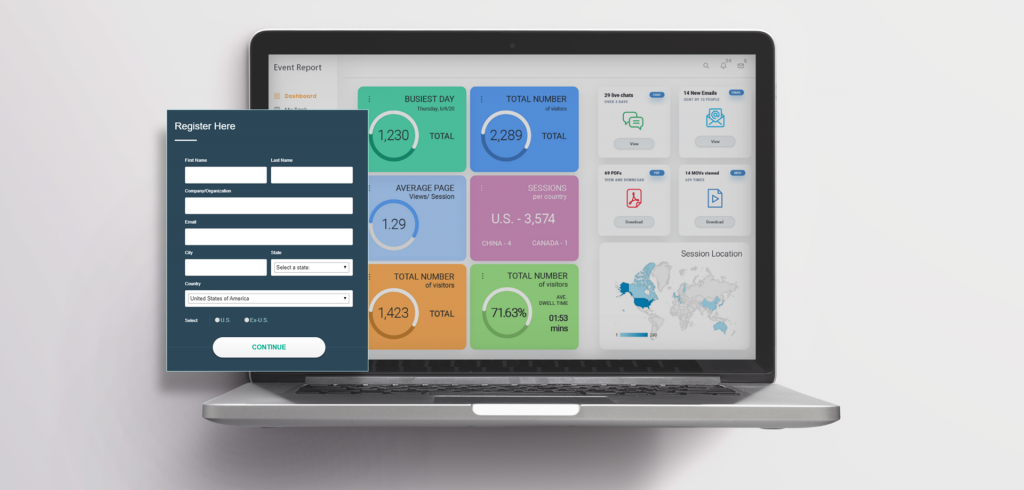
There were tradeoffs. The platform was built quickly, and some aspects—particularly reporting—required more manual effort than ideal. Demand for deeper analytics grew as adoption increased as the customers and their internal stakeholder saw the detail and great value of our detailed reporting, reinforcing the importance of investing in that layer earlier.
What this work demonstrated is that enterprise engagement doesn’t need to be tied to singular moments. With the right system in place, it can be continuous, adaptable, and integrated into how organizations operate over time.